Bundle property and save an average of 5% on auto in most states!Δ list with 3 items
Or, quote another product list with 38 items
Get the #1 motorcycle insurance starting at $75 per year*
Bundle property and save an average of 5% on auto in most states!Δ list with 3 items
Or, quote another product list with 38 items
You're passionate about riding and you've invested in your motorcycle, so we make it easy to protect your bike and budget. Get a motorcycle insurance quote online and join millions of riders who trust Progressive. Whether you're switching to save or insuring a new ride, find flexible coverage that fits.
Progressive always uses Original Equipment Manufacturer (OEM) parts for repairs as well as custom parts if your bike is customized. And we insure all types of motorcycles, including Honda, Harley Davidson, Indian, Kawasaki, Polaris, and Yamaha.
No need to hunt for savings. We automatically apply eligible discounts when you quote online or by phone. Check out a few that you could earn:**
Pay your policy up front and in full and earn an easy motorcycle insurance discount.
Have a motorcycle endorsement on your driver's license? You could save even more.
Save by bundling insurance — earn another discount if you have auto, homeowners, renters, RV, or boat insurance with us.
1 out of 3 motorcycle riders choose Progressive† for smart and affordable coverage.
We've handled motorcycle claims for more than 50 years, and we're here for you.
Progressive proudly sponsors the world's largest consumer motorcycle show tour.
Whether you ride a Kawasaki sport bike, Honda cruiser, or custom hog, we'll help you customize your coverage to match your bike.
Common types we cover include:
The most common type of motorcycle, usually sporting a V-twin and full-view engine
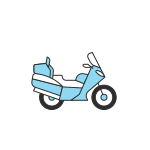
Motorcycles built for long-distance comfort with storage

Small-engine, lightweight vehicles with big city convenience
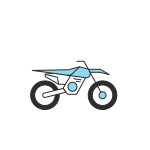
Lightweight motorcycles with rugged tires and enhanced suspension
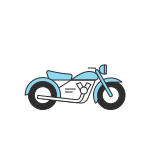
"Classic" or "collectible" motorcycles over 25 years old
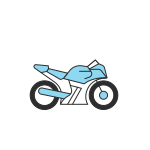
High-performance motorcycles built for speed, also known as street bikes
Uniquely built by a manufacturer, shop, or yourself

Multi-utility, smaller-sized tractors used to assist small acreage and hobby farms
Off-roading vehicles that usually have four wheels (but can have up to eight)
Electric bicycles with battery-powered motors to help with pedaling
Three-wheeled vehicles that drive like cars and offer motorcycle thrills
If you carry comprehensive and collision coverage, your Progressive policy automatically includes complimentary accessories and custom parts/equipment (CPE) coverage. That means any chrome, upgrades, and other customizations you added are covered up to $3,000 (you have the option to purchase additional accessory coverage up to $30,000).
Cover your bike, wallet, and others on the road with these coverages and more:

Required
Protects your wallet if you cause an accident
Motorcycle liability coverage is required in nearly every state to ride legally. If you're liable in an accident, liability coverage can pay for property damage, injuries you cause to others, and legal expenses.
Example: You lose control of your motorcycle, colliding with a parked car. Liability coverage can pay for repairs to the damaged vehicle up to your policy's liability limits.

Recommended
Protects your motorcycle against accidents and more
Motorcycle comprehensive coverage protects your bike against incidents out of your control, like theft, vandalism, fire, and weather. Motorcycle collision coverage covers damage to your bike if you collide with an object or vehicle.
Example: While in storage for the winter, your bike is stolen from your storage unit. Comprehensive may pay to replace your bike, minus your deductible.
Example: Your bike is damaged after a minor collision with a guardrail. Collision can cover the repair cost, minus your deductible.

Included
Repairs your bike with the right parts
If your motorcycle has Original Manufacturer (OEM) parts, we use OEM parts when repairing your bike after a covered accident instead of aftermarket parts. And if your parts are customized, Progressive uses custom parts for repairs. OEM coverage is automatically included if your policy has comprehensive and collision.
Example: Your Honda's chrome wheels were damaged beyond repair in an accident. Progressive can pay to replace the wheels with OEM wheels, minus your deductible.

Optional
Protects new bikes against depreciation
If you total your new motorcycle, Progressive can pay the full manufacturer's suggested retail price for a brand-new bike, minus the deductible on your policy. Your motorcycle must be no more than one model year old on a new policy or two model years old during the renewal of a policy with total loss coverage.
Example: You recently paid $25,000 for a new bike, but now it's worth $18,000. If it's totaled in a covered loss, and the latest model costs over $25,000, we'll pay you that amount. Your policy will cover the actual cash value of your bike if your motorcycle isn't eligible for total loss coverage at renewal.
While each state has its own motorcycle requirements, liability coverage is required by law in nearly every state. If you finance or lease your bike, your lender typically requires comprehensive and collision coverage. Find out what your state requires for motorcycle insurance .
In addition to Progressive's discounts, you can adjust your coverages and increase your comprehensive and collision deductibles to decrease your rate. Find more ways to lower the cost of motorcycle insurance.
Helping you safeguard your ride is one of our specialties. See all motorcycle insurance resources.

RV insurance
Insure your motorhome or travel trailer with customized coverage for almost any situation

Boat insurance
Protect your boat or PWC today; no marine survey or navigation plan is required
Auto insurance
Get personalized and discounted auto coverage for all your family's vehicles

Classic Car insurance
Safeguard your collector vehicle with affordable and specialized coverage

Homeowners insurance
Make sure you, your home, and your personal belongings are protected

Renters insurance
Get liability coverage and protect your belongings for less than $1 per day††